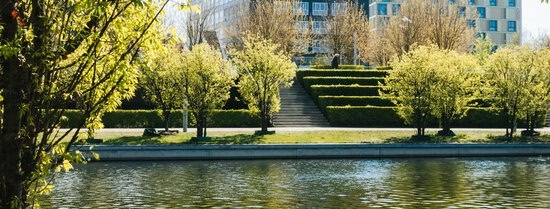
Campus Woudestein isn't just a place to study and work — it's also a living, growing part of Rotterdam's ecosystem. From the trees that line the paths, to the pond at its centre, the campus' green spaces shape the daily experience of everyone here, and increasingly, they shape how EUR plans for the future.

Our ambition
EUR is building a campus that can withstand the climate of the decades ahead. Green space is an essential infrastructure: it buffers heat, retains water, and restores biodiversity, while directly supporting the health, wellbeing, and concentration of everyone who studies and works here. Trees and green space provide shade and help reduce heat stress, while permeable (paving systems have pores or gaps that allow water to absorb into the ground) and green surfaces support water storage and infiltration through the surface and into underlying layers.
Biodiversity is part of this resilience. A wider variety of species gives campus ecosystems the ability to absorb shocks such as extreme weather, pests, disease, that a uniform, paved landscape cannot. That resilience depends on connection: Woudestein's biodiversity is strengthened by staying linked to the wider ecosystem around it, including green corridors like Arboretum Trompenburg and the Kralingse Bos. By 2030, we aim to increase biodiverse green space on campus by at least 30%, in line with the Kunming-Montreal Global Biodiversity Framework's goal to halt and reverse nature loss, strengthening the connection between campus and city.
To get there, we plan for nature's needs from the very beginning of every campus project, giving them the same weight as the needs of buildings and infrastructure. This reflects EUR's quintuple helix approach to engagement, extending the conventional academia-industry-government-society model by recognising nature as a partner in shaping our campus environment. Campus Woudestein itself serves as a living laboratory, where research, education, and daily operations work together to restore a thriving ecosystem on campus.

Understanding our starting point
In 2024, EUR commissioned a campus-wide fauna survey to establish a baseline of the species currently present on campus. In 2025, this was followed by a dedicated biodiversity vision for Campus Woudestein. The vision scoped its assessment to the campus' position alongside ecologically significant green corridors, including the Kralingse Bos and Arboretum Trompenburg. It also identified the main pressures on campus biodiversity: land use and paved surfaces, artificial lighting that disturbs nocturnal species like bats and moths, water quality pressures in the campus pond and waterways, invasive species including Japanese knotweed and giant hogweed, and human disturbance of green areas. A campus-wide biodiversity framework and monitoring plan, building on this baseline, is currently in development.
Nature on campus, in practice:


Campus Garden
Opened in 2019 and maintained by student and staff volunteers together with Edible EUR and the Erasmus Sustainability Hub, the campus garden grows fruit, vegetables, and herbs using natural farming principles: no ploughing, no chemical sprays and no artificial fertilisers. Instead, soil life and deep-rooted planting do much of the work. Produce from the garden is used by the Erasmus Food Lab and the Erasmus Sport Café.
The garden is also home to a bee palace, housing around 60,000 bees across three hives, cared for with the help of a professional beekeeper. Edible EUR is building an index of the wild plants and insects found in the garden, creating an opportunity for students and staff to learn more about biodiversity. Everyone is welcome to get involved, with no gardening experience required.